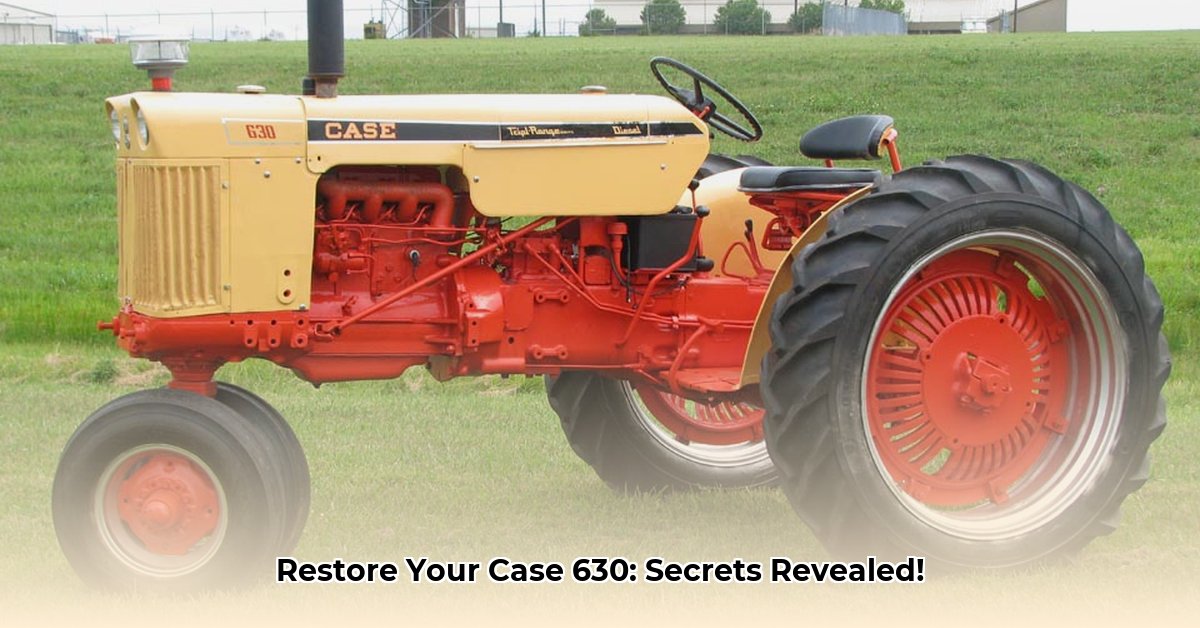
Case 630 Tractor: A Deep Dive into Restoration and Maintenance
The J.I. Case 630, a stalwart of the early 1960s agricultural landscape, remains a popular choice among vintage tractor enthusiasts. Its robust design and versatile capabilities earned it a loyal following. However, restoring a Case 630 to its former glory presents a unique set of challenges, demanding patience, resourcefulness, and a healthy dose of mechanical aptitude. This comprehensive guide offers expert advice and practical steps to navigate the restoration process, from sourcing parts to tackling common mechanical issues. For additional specifications on Case tractors, check out this helpful resource: Case Tractor Specs.
Technical Specifications and Variances: Understanding Your Case 630
The Case 630's specifications varied slightly depending on the year of manufacture and intended application. However, several key features define this model. It typically featured either a gasoline or diesel engine, influencing its power output and operational characteristics. The transmission also exhibited variations across different production runs, directly impacting the functionality of the Power Take-Off (PTO) system. While some models boasted a dual-speed PTO (540 and 1000 RPM), the precise behavior of the "live" PTO (whether it remains engaged when the clutch is disengaged) remains a point of debate among enthusiasts. This ambiguity highlights the importance of careful investigation and hands-on assessment during restoration.
Did you know? The variations in engine and transmission configurations across Case 630 models are a major source of confusion and troubleshooting challenges for restorers. This underscores the need for careful identification of your specific model before embarking on any repair or restoration project.
User Experiences: Lessons Learned from the Field
The online community surrounding vintage Case tractors is a treasure trove of firsthand experiences. These forums provide invaluable insights into the joys and tribulations of Case 630 ownership and restoration. Owners often share their challenges with parts sourcing, repair techniques, and common problems encountered. Their collective experiences provide a real-world perspective, often highlighting unexpected obstacles and offering practical solutions. For example, several users noted difficulties in gear shifting when the PTO is engaged, a recurring theme within the Case 630 community. One user from Yesterday's Tractors Forum, John Miller, a retired agricultural engineer, commented, "Finding a suitable replacement engine block for my '63 Case 630 was akin to searching for a unicorn." This anecdote illustrates the typical sourcing difficulties faced by many restorers.
Parts Sourcing and Maintenance: A Strategic Approach
Securing replacement parts for a Case 630 often proves to be the most significant challenge in the restoration process. Original factory parts are exceptionally rare, necessitating a multi-pronged approach to parts acquisition. Online forums, dedicated to vintage Case tractors, often serve as hubs where enthusiasts connect and exchange parts. Specialized salvage yards catering to classic agricultural machinery also represent a viable source. Moreover, the rise of 3D printing technology offers a novel solution for fabricating custom parts that are no longer commercially available. However, this requires either considerable design expertise or collaboration with a skilled 3D printing specialist.
Key Fact: The average restoration of a Case 630 can take anywhere from 6 months to 2 years depending on the condition of the tractor and the parts sourcing challenges faced.
Case 630 PTO System Troubleshooting: A Detailed Guide
The PTO (Power Take-Off) system on a Case 630 presents a significant area of concern for restorers. Understanding the intricacies of your tractor's PTO is paramount before undertaking any repairs.
Step-by-Step Troubleshooting:
- Identify Clutch Type: Determine whether your Case 630 utilizes a dry clutch or a Constant Mesh (COM) system. This crucial step dictates the subsequent troubleshooting procedures. (Consult your owner's manual for specific model identification.)
- Inspect PTO Shaft: Carefully examine the PTO shaft for any signs of wear, damage, or obstructions. Remove any visible debris.
- Check Connecting Bolts: Verify the condition and tightness of the six bolts connecting the PTO to the transmission housing. Tightening loose bolts may resolve minor issues.
- Engage Online Communities: Seek assistance from online forums such as Yesterday's Tractors. The shared knowledge and experiences within these communities can prove invaluable in diagnosing and resolving complex PTO problems.
Collector's Value and Market Implications: Preserving a Legacy
The Case 630 holds a significant place in the collector's market for vintage tractors. Several factors influence its value, including its overall condition, originality of parts, and completeness. A well-preserved tractor, retaining most of its original components, commands substantially higher prices. Networking with other Case 630 collectors and enthusiasts allows you to leverage their expertise to enhance your understanding of your tractor's value and to garner insight into successful restoration strategies.
Pivotal Points:
- Parts scarcity: The greatest challenge in restoring a Case 630 is locating and obtaining replacement parts.
- PTO system ambiguity: Understanding the nuances of the PTO system requires meticulous investigation and a willingness to consult expert opinions.
- Community support: Engaging with online forums and enthusiast groups provides invaluable support, advice, and resources for restorers.
Conclusion: A Journey of Restoration and Preservation.
Restoring a vintage Case 630 tractor is a labor of love, a testament to the dedication and skill of its owner. While the process presents numerous challenges, the rewards—from the satisfaction of revitalizing a piece of agricultural history to connecting with a passionate community of enthusiasts—make the journey worthwhile. By carefully following the steps outlined in this guide and leveraging the resources available through online forums and expert insights, you can successfully restore your Case 630 to its former glory, ensuring that its legacy endures for generations to come.